
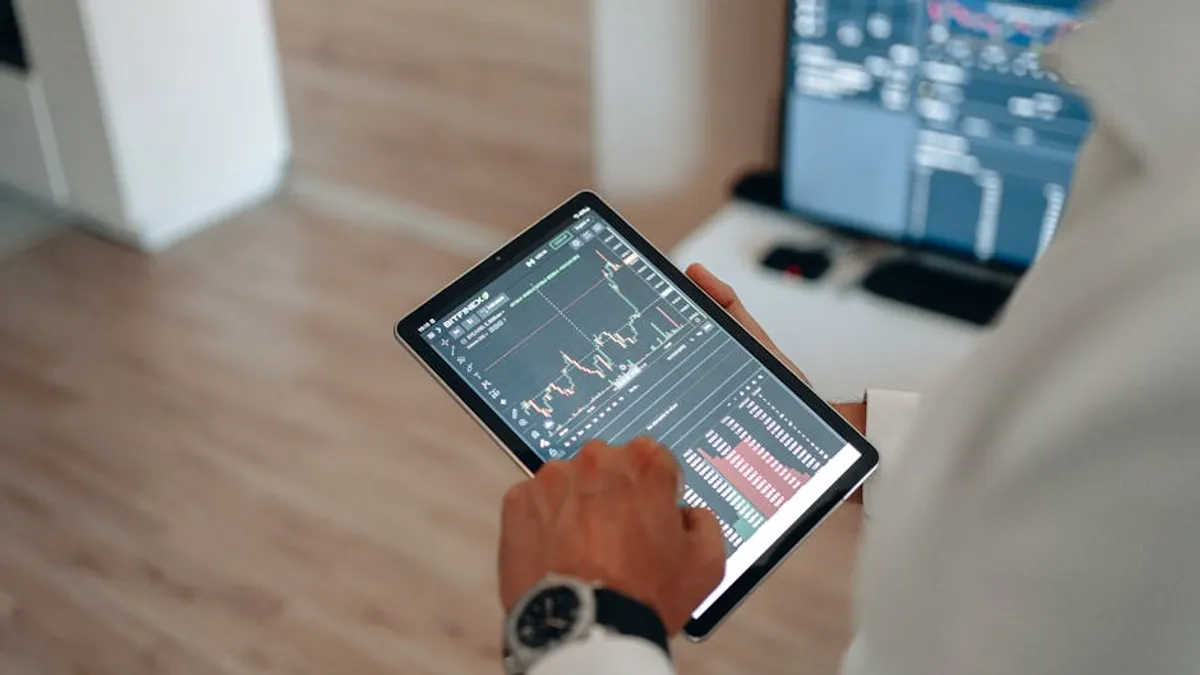
Businesses operating in today's volatile landscape recognize energy market forecasting as a non-negotiable component of strategic planning. It's not merely about predicting price fluctuations; it's about understanding the intricate web of supply, demand, regulatory shifts, and geopolitical events that dictate operational costs, investment viability, and competitive positioning. Effective forecasting provides the clarity needed to navigate procurement decisions, manage risk exposure, and allocate capital efficiently, directly impacting profitability and long-term sustainability. Without robust insights into future energy trends, businesses risk being reactive, vulnerable to market shocks, and missing critical opportunities for growth and optimization. This proactive stance allows businesses to better anticipate and adapt to key energy industry trends that shape the market.
The Foundational Pillars of Energy Forecasting
Accurate energy market forecasts hinge on the meticulous analysis of several interconnected factors. Businesses constantly monitor these pillars to build comprehensive predictive models.
Supply-Side Dynamics
Understanding future energy availability requires deep dives into production capacities, resource discoveries, and the operational status of existing infrastructure. This includes:
- Production Volumes: Daily, weekly, and monthly outputs from major oil and gas fields, coal mines, and renewable energy installations.
- Infrastructure Reliability: The status of pipelines, transmission lines, refineries, and storage facilities, including planned and unplanned outages.
- Geopolitical Stability: Conflicts, sanctions, and international relations that can disrupt supply chains or impact major producing regions.
- Technological Advancements: New drilling techniques, improved solar panel efficiency, or breakthroughs in battery storage that alter the supply landscape.
Demand-Side Drivers
Forecasting energy consumption requires granular insight into economic activity, weather patterns, and consumer behavior. Key indicators include:
- Economic Growth: GDP figures, industrial output, and manufacturing indices directly correlate with energy demand.
- Weather Patterns: Seasonal temperature forecasts, extreme weather events (heatwaves, cold snaps), and long-term climate trends significantly influence heating and cooling loads.
- Energy Efficiency: Adoption rates of energy-saving technologies in industrial, commercial, and residential sectors.
- Population Growth and Urbanization: Demographic shifts that drive increased demand for power and transportation fuels.
Regulatory and Geopolitical Influences
Policy decisions and international events can rapidly reshape energy markets, often with profound and immediate effects. Businesses track:
- Environmental Regulations: Carbon pricing mechanisms, emissions standards, and renewable energy mandates that incentivize or penalize certain energy sources.
- Trade Policies: Import/export tariffs, quotas, and trade agreements affecting energy flows and pricing.
- Subsidies and Incentives: Government support for specific energy technologies or industries.
- International Relations: Diplomatic tensions or alliances that can impact energy security and global supply.
Navigating Time Horizons: Short, Medium, and Long-Term Insights
The utility of an energy forecast is intrinsically linked to its time horizon. Businesses segment their forecasting needs to address distinct operational and strategic requirements.
Immediate Operational Decisions
Short-term forecasts, typically spanning hours to a few days, are critical for real-time operational adjustments. Energy traders use them to optimize buying and selling positions, while power plant operators rely on them for dispatch scheduling and managing grid stability. These forecasts are highly sensitive to sudden weather changes, unexpected outages, and immediate market sentiment.
Strategic Procurement and Resource Allocation
Medium-term forecasts, ranging from weeks to a year, inform procurement strategies, hedging decisions, and maintenance planning. Businesses use these to negotiate contracts, lock in prices for future deliveries, and schedule equipment overhauls to minimize disruption during peak demand periods. This horizon balances detailed operational data with broader economic and seasonal trends.
Capital Investment and Market Evolution
Long-term forecasts, extending several years to decades, are indispensable for capital-intensive decisions like building new power plants, developing renewable energy projects, or investing in energy infrastructure. These forecasts consider macro-economic trends, technological trajectories, and long-term climate policies to assess project viability and market shifts. They are less about precise price points and more about directional trends and scenario planning.
Methodologies for Predictive Accuracy
Businesses deploy a range of sophisticated methodologies to generate energy market forecasts, often combining several approaches to enhance robustness.
Quantitative Modeling Approaches
These rely on historical data and statistical techniques to identify patterns and predict future outcomes. Common methods include econometric models that link energy prices to economic variables, time-series models (like ARIMA or GARCH) that extrapolate past trends, and increasingly, machine learning algorithms. Advanced AI models, including neural networks, can process vast datasets from diverse sources—weather, satellite imagery, social media sentiment—to uncover complex, non-linear relationships that traditional models might miss. Best for: Identifying subtle patterns and making data-driven predictions in stable market conditions.
Qualitative and Hybrid Techniques
When historical data is scarce or market dynamics are highly uncertain, qualitative methods become crucial. Expert judgment, the Delphi method (structured communication among experts), and scenario planning (developing plausible future states) provide valuable insights. Many businesses employ hybrid models, integrating quantitative outputs with qualitative expert adjustments to account for unquantifiable factors like geopolitical risks or sudden policy shifts. Best for: Incorporating human intelligence and addressing high-uncertainty events.
Pro Tip: Over-reliance on any single forecasting model, especially during periods of unprecedented market volatility or rapid technological change, can lead to significant strategic missteps. Always integrate diverse data sources and methodologies, and periodically validate your models against real-world outcomes to ensure adaptability.
Essential Data Streams and Their Integration
High-quality forecasts are only as good as the data feeding them. Businesses invest heavily in acquiring and integrating diverse data streams:
- Government and Agency Reports: Data from bodies like the U.S. Energy Information Administration (EIA), International Energy Agency (IEA), and national meteorological services provide foundational statistics on production, consumption, reserves, and weather.
- Financial Market Data: Futures contracts, options prices, and trading volumes from energy exchanges offer forward-looking price signals and market sentiment.
- Satellite and IoT Data: Satellite imagery can track industrial activity, infrastructure development, and agricultural output, while IoT sensors provide real-time operational data from power plants and grids.
- Internal Operational Data: Historical consumption patterns, production schedules, and maintenance records from a business's own operations are vital for tailored forecasts.
- News and Social Media Feeds: Text analytics and natural language processing can extract insights from news articles and social media to gauge market sentiment and identify emerging risks.
Overcoming Forecasting Complexities
Energy market forecasting is fraught with challenges. The inherent volatility of commodity markets, driven by unpredictable geopolitical events and extreme weather, makes long-term accuracy difficult. Data quality and availability can be inconsistent, particularly in emerging markets. The rapid pace of technological innovation, especially in renewables and energy storage, continually shifts the market paradigm, rendering older models less effective. Furthermore, the increasing interconnectedness of global energy markets means local events can have ripple effects worldwide, demanding a holistic, adaptive approach to forecasting.
Translating Forecasts into Business Advantage
The ultimate value of energy market forecasting lies in its actionable insights. Businesses leverage these predictions to gain a competitive edge and build resilience.
Risk Mitigation and Hedging Strategies
Accurate forecasts enable businesses to anticipate price spikes or dips, allowing them to implement hedging strategies (e.g., forward contracts, options) to lock in favorable prices or protect against adverse movements. This stabilizes energy costs, making budgets more predictable.
Optimized Energy Procurement
By understanding future supply and demand dynamics, businesses can time their energy purchases more effectively. This might involve shifting consumption to off-peak hours, negotiating better contract terms with suppliers, or exploring alternative energy sources when traditional ones are projected to be expensive.
Capital Planning and Infrastructure Development
Long-term forecasts guide significant investment decisions. Whether it's building a new factory, upgrading energy-intensive equipment, or investing in on-site renewable generation, these predictions inform the financial viability and strategic alignment of capital projects, ensuring resources are allocated where they will yield the greatest return.
Building Resilient Energy Strategies
Effective energy market forecasting moves beyond mere prediction; it's about fostering organizational resilience. Businesses that prioritize robust, multi-faceted forecasting capabilities are better equipped to adapt to market shocks, capitalize on emerging opportunities, and maintain a competitive edge. This necessitates continuous data integration, model refinement, and a willingness to incorporate both quantitative rigor and qualitative expert judgment. The goal is not perfect foresight, but rather informed agility in a perpetually evolving energy landscape.
Frequently Asked Questions
Why is energy market forecasting so challenging?
Energy markets are highly susceptible to unpredictable factors like geopolitical events, extreme weather, rapid technological shifts, and regulatory changes, making precise long-term predictions inherently difficult.
What's the difference between short-term and long-term energy forecasts?
Short-term forecasts (hours-days) focus on immediate operational decisions and trading, while long-term forecasts (years-decades) inform strategic capital investments and infrastructure planning, considering broader trends.
How do businesses use AI and machine learning in forecasting?
AI and machine learning analyze vast datasets (weather, financial, operational) to identify complex patterns and improve the accuracy of predictions, especially in dynamic and data-rich environments.
Who uses energy market forecasts?
A wide range of entities, including energy producers, utilities, large industrial consumers, financial institutions, government agencies, and energy traders, rely on these forecasts for strategic and operational planning.